


AI for Ecommerce in 2026: What It Actually Does, and the Tools Worth Using

AI for ecommerce is software that handles the repetitive parts of running a store: answering customers, recommending products, writing listings, setting prices, forecasting stock, and gets better at each one as it sees more of your data. In Shopify's 2025 merchant survey, 75% of store owners said they were already using it somewhere in their business.
The useful question isn't whether to adopt it. It's which job to hand over first.
Here's the short answer. Tidio for customer service, Klaviyo for email, Octane AI for personalisation, Shopify Magic if you're already on Shopify, and an AI agent like Mira when the thing slowing you down isn't your storefront but your own admin.
What do AI tools for ecommerce actually do?
AI shows up in six places in a typical store. Four are covered here; customer service and personalisation get their own sections below.
Product content and photography
Generative AI for ecommerce writes descriptions, alt text, and ad copy at catalogue scale, and turns phone photos into studio-grade images. Product content creation AI for ecommerce like Jasper handles the writing; AI product photography tools for ecommerce like Photoroom and Flair.ai handle backgrounds and lifestyle shots without a studio booking.
This is the fastest payback on the list. A 200-SKU catalogue that would take a copywriter three weeks takes an afternoon, and on straightforward products the quality gap is small. It widens fast where the story matters, so use AI for the long tail and write your hero products yourself.
🟢 Prompt — Product descriptions at scale
AI search and discovery
AI search for ecommerce does two jobs now, and most stores only think about the first.
- On-site search that understands intent. For example, a shopper typing "something warm for a toddler" gets fleece, not a keyword miss, is what Algolia and Constructor sell.
- The second job is newer. AI search optimization for ecommerce means making your catalogue legible to ChatGPT, Google AI Mode, and Copilot, because a growing share of shoppers start there rather than on your site.
Email marketing and cart recovery
AI for email marketing ecommerce decides who gets what and when, instead of blasting one send to a list. Klaviyo segments on behaviour, optimises send times per recipient, and adapts flows to what each person opens.
Abandoned cart recovery AI is the highest-value version, for an obvious reason: Baymard Institute puts global cart abandonment at roughly 70%. Recovering a slice of that is usually the most profitable automation a store runs.
Pricing and inventory
AI for dynamic pricing tracks competitors and adjusts your prices automatically. Prisync and Competera are the common picks. AI for inventory management forecasts demand so you order the right quantities, which is Inventory Planner's job.
Both need volume. Under a few hundred orders a month there isn't enough signal to forecast from, and aggressive automated discounting carries a cost that never shows up in the dashboard: it teaches customers to wait for the next markdown.
Best AI tools for ecommerce in 2026: comparison table
We evaluated these AI tools for ecommerce based on three practical criteria: how easy they are to use without a developer, whether they integrate with Shopify or WooCommerce, and whether pricing is publicly available.
The six below are the strongest options for most small and mid-sized ecommerce businesses.
Two things to notice: Most stores run four to six tools, not one. No single product covers support, email, personalisation, and content well. And the licences are cheap relative to the real cost: the week you'll spend connecting them.
AI for ecommerce customer service: the biggest time saver
Customer service is where AI removes the most hours, because most of the volume is the same handful of questions asked by different people. It's also the most mature AI category in ecommerce.
Picture a store taking 500 enquiries a week. The pattern is always roughly the same: order status, returns and refunds, and product questions about sizing, materials, or compatibility. An AI chatbot for ecommerce closes 70–80% of that without a human opening the ticket.
What AI chatbots for ecommerce do well is anything with a definite answer sitting in a system they can reach, for example, order status pulled live from your platform, shipping windows, sizing from the product page, AI for returns and refunds inside policy. Conversational AI for ecommerce handles all of it because none of it requires judgement.
Where AI customer support for online stores fails is the edge case and the angry customer. A shipment lost twice, a chargeback threat, a second broken delivery, these need a person, and a bot that keeps trying makes it worse. Your escalation rules matter more than the model underneath.
Tidio and Gorgias are the best AI customer service agents for ecommerce for most stores. Tidio for small teams on a free or $29 plan, Gorgias once you want native order actions in the helpdesk.
🟢 Prompt — Customer reply
AI personalisation for ecommerce: from browse to buy
AI personalisation shows the right product to the right person at the right moment by reading what they actually do, rather than guessing from the segment they were filed under.
It takes three concrete forms:
- Email recommendations that reflect what someone browsed last week instead of what's on promotion.
- Dynamic category pages that reorder per visitor.
- And quiz-based recommendations which ask four questions and turn a cold visitor into a qualified match. That last one doubles as lead generation for ecommerce AI: a completed quiz is an email address and a stated preference in one step.
Here's the condition: AI personalization software for ecommerce learns from traffic, and under a few thousand sessions a month there isn't enough of it. Below that line, AI-powered product recommendations perform about as well as a hand-picked "customers also bought" row, and cost considerably more. It's the right second investment, rarely the first.
🟢 Prompt — Product recommendations
How Mira works as an AI agent for ecommerce
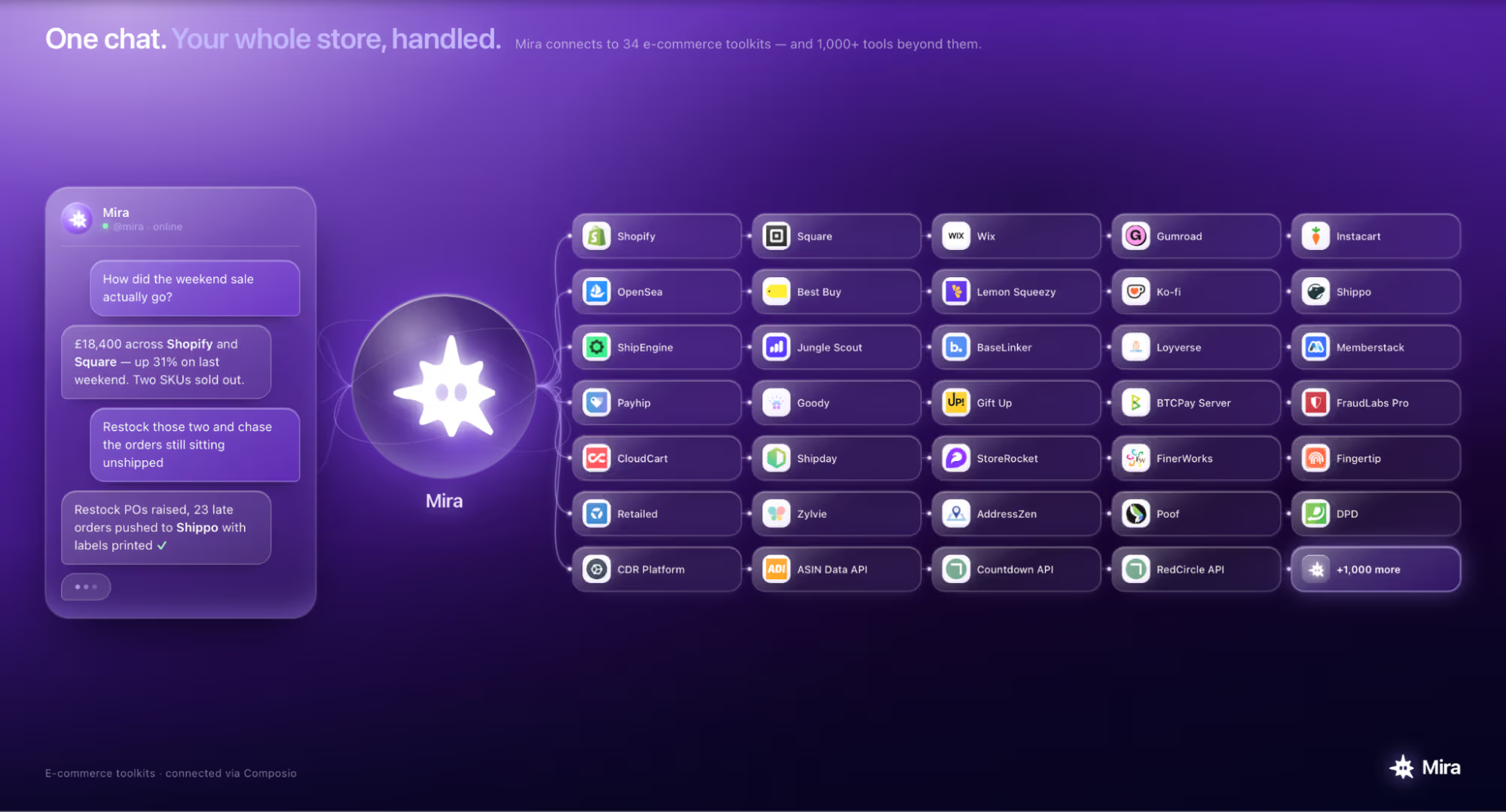
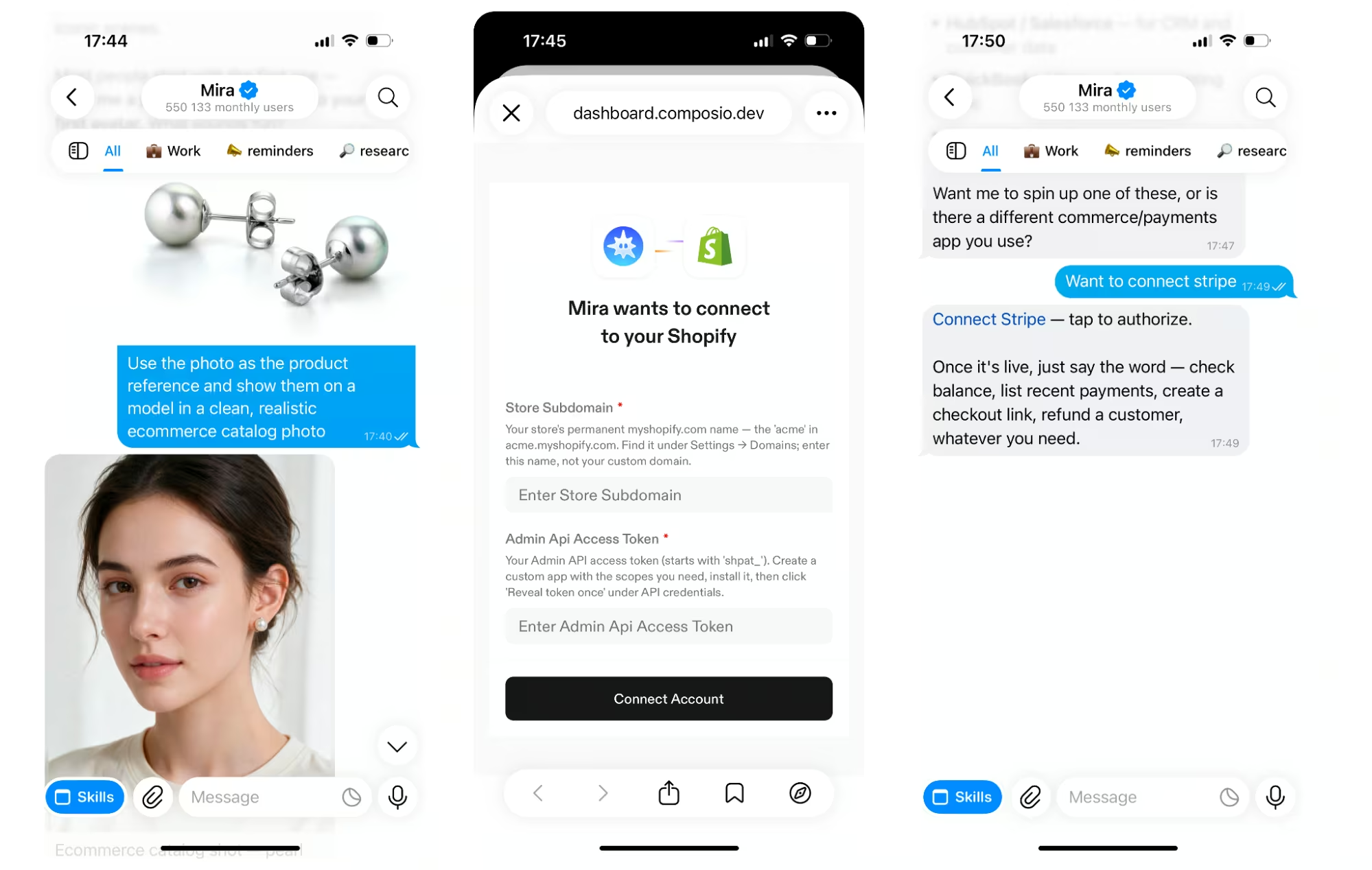
Mira isn't an ecommerce platform like Shopify. It's an AI agent that works across your commerce stack from your messenger. Connect Shopify and the tools around it, and Mira can help manage products, orders, inventory, customers, support, marketing, and day-to-day operations without making you jump between dashboards.
For example, an ecommerce operator could ask Mira to check an order, update inventory, create or edit Shopify products, pull customer details, draft a support reply, check a campaign, or send a supplier follow-up. Shopify alone exposes actions for products, orders, fulfillment, inventory, collections, refunds, and customer records.
The bigger value is connecting those steps. Mira can take one instruction and work across your store, email, support, marketing, docs, and team tools instead of automating one isolated task. It also keeps context across conversations, so recurring suppliers, customers, products, and workflows do not start from zero each time.
🟢 Prompt — Weekly sales review
Mira also handles content generation. It can write product descriptions, emails, ad copy, social posts, and campaign briefs, as well as generate and edit visuals for your store and marketing. It can switch between 10+ AI models, including Nano Banana for image, video and text generation and editing, so you can use the right model for the task without moving between separate AI tools.
AI for ecommerce businesses: where to start
Start with the task costing you the most time or revenue, then prove the workflow works before adding more software. Most ecommerce teams do not need a large AI stack. They need a few tools that solve clear problems and are easy to run.
Five good starting points:
- Automate support first: Use Tidio or a similar support tool to handle repetitive questions, order-status requests, and common customer issues before they reach a person.
- Use the AI already inside Shopify: Shopify Magic and Sidekick can help with product copy, image editing, store questions, and routine tasks without adding another platform.
- Automate lifecycle email: Klaviyo is a practical starting point for abandoned carts, post-purchase flows, win-back campaigns, and customer segmentation.
- Add an agent across your stack: Mira can work across Shopify, email, support, spreadsheets, marketing, and team tools to handle reporting, supplier follow-ups, order checks, and other workflows from one chat.
- Leave advanced personalization for later: Dynamic pricing and deep personalization usually become more valuable once you have enough traffic, customer data, and order volume to train and measure them properly.