



For the last two years, AI agents have been able to do almost everything except one thing: spend money. They could research a trade, draft the transaction, and tell you exactly what to do - then stop and wait for you to tap confirm. The agent was an advisor. You were still the one with the wallet.
That changed in 2026. AI agents operating inside Telegram can now hold funds and execute transactions on their own, within limits you set, without asking for approval on every action. The shift has a name, and TON Tech - the infrastructure team behind Telegram's blockchain - put it plainly when they launched the standard that made it possible.
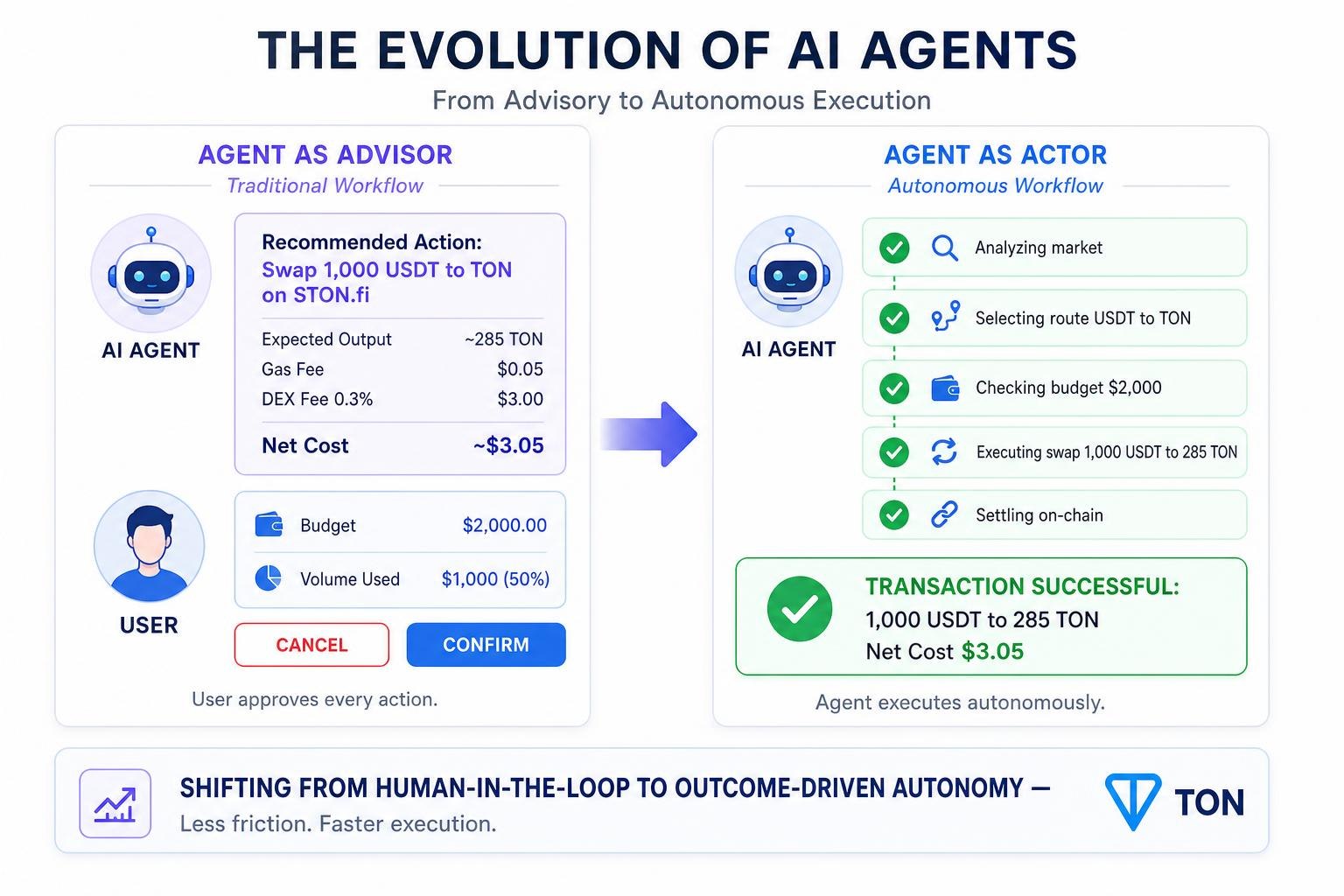
“Agentic Wallets turn AI agents from assistants into actors.” That is how Andrew Grekov, Head of TON Tech, described the launch. Agents on Telegram, he said, can now not only communicate, but transact - making payments and interacting with on-chain services on behalf of users, without ever touching their keys.
Here is what that actually means, how it works, what it unlocks - and the risks you should understand before handing an AI agent a budget.
What Is an Agentic Wallet?
An agentic wallet is a dedicated on-chain wallet that belongs to an AI agent, funded and owned by you. TON Tech launched the standard on April 28, 2026, as an open, self-custodial way to give Telegram-based agents the ability to move money within rules you define.
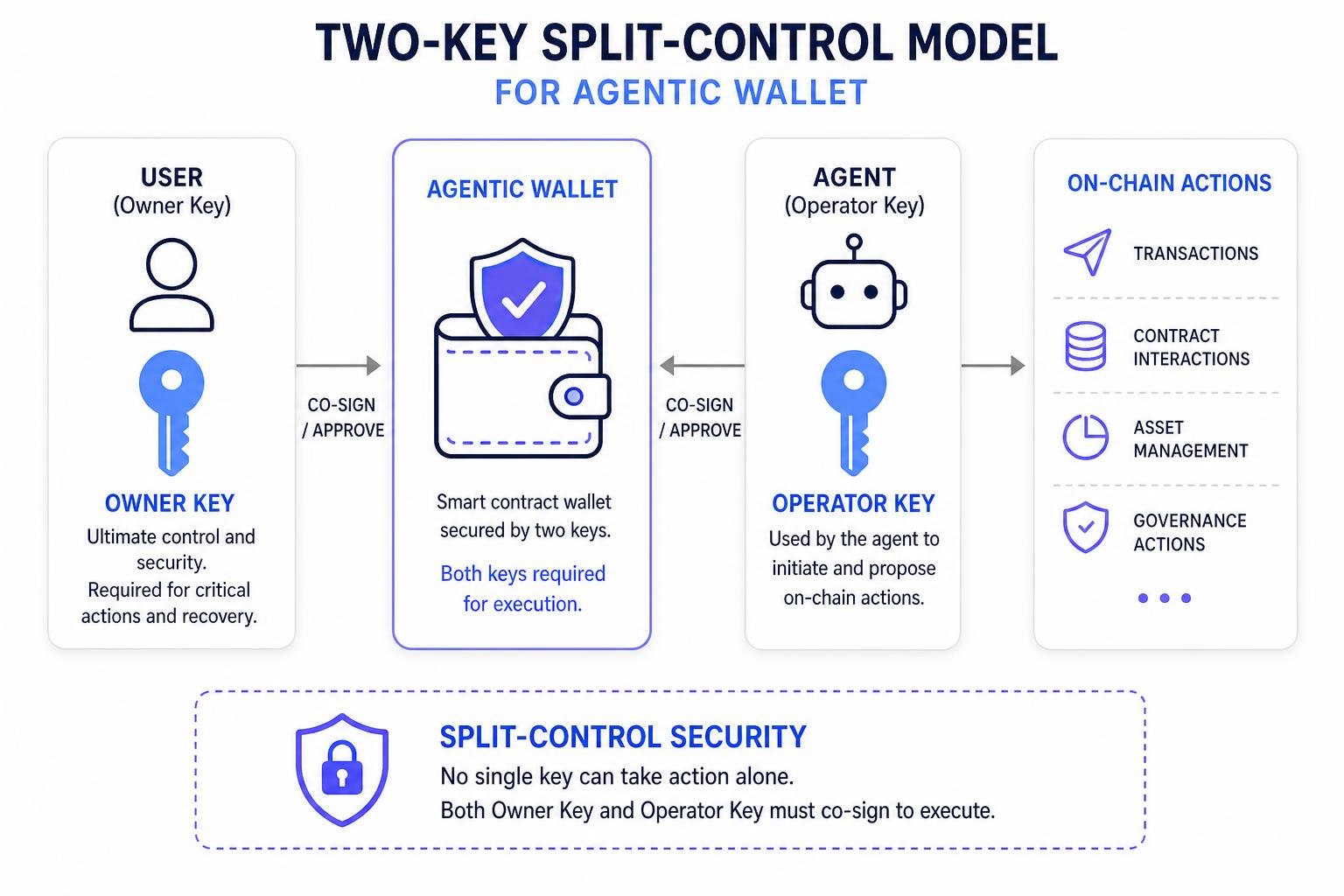
The key idea is split control. You fund a wallet for the agent and set a spending budget. The agent operates inside that budget autonomously - executing transactions without pausing for your approval each time - but ownership stays anchored to your main wallet, and you can revoke access instantly. No intermediary ever holds your funds. It is not a custodial service.
If you are new to how autonomous agents work in the first place, our explainer on how AI agents work covers the planning-and-action loop that agentic wallets plug into. An agentic wallet is simply the missing piece that lets that loop touch money.
How Agentic Wallets Work, Step by Step
The mechanics are deliberately simple from the user's side, even though the architecture underneath is not. According to TON's official documentation, each agentic wallet is a smart contract deployed as a Soulbound Token within a shared collection, and it works like this:
• You fund and deploy. From your regular TON wallet, you create the agent's wallet, fund it with a set budget, and define spending limits.
• The agent gets its own key. The agent holds its own operator key and signs transactions itself - but only within the budget and rules you set.
• It acts autonomously. Inside those parameters, the agent executes transfers, swaps, and other on-chain actions without per-action confirmation.
• You stay in control. You retain ownership through your main wallet at all times, and access can be revoked instantly if anything looks wrong.
Because the design is non-custodial and uses a two-key model, no third party ever escrows your money. The agent can spend, but it cannot run off with the wallet.
What Agentic Wallets Actually Unlock
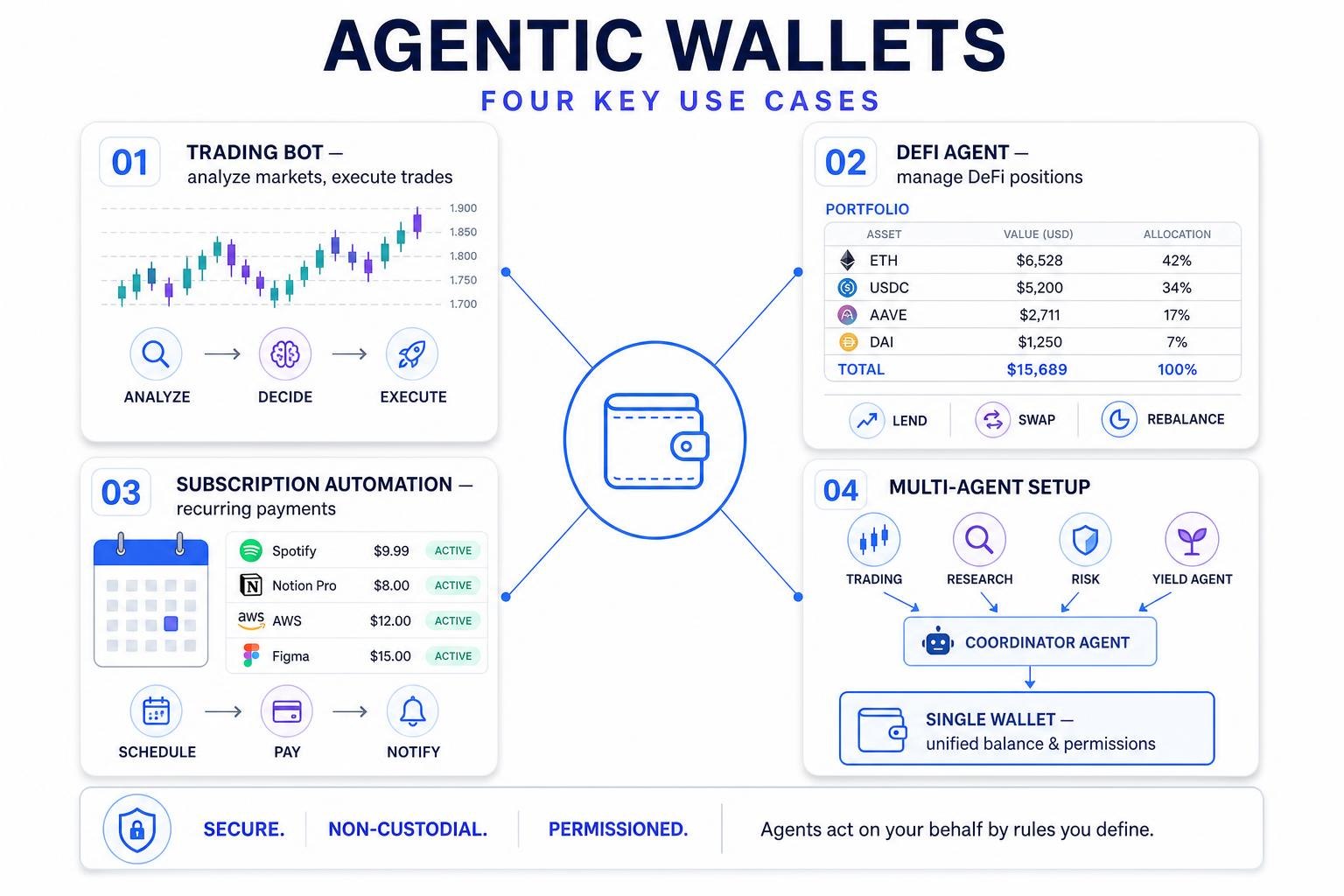
Giving an agent a bounded budget sounds abstract until you look at what it enables in practice. TON Tech outlined several concrete use cases at launch:
• Trading bots with predefined budgets - execute swaps within defined parameters, no manual confirmation per trade.
• DeFi agents - handle staking, portfolio rebalancing, and yield optimization on their own.
• Subscription and payment automation - recurring payments, API usage fees, and micro-transactions without you intervening.
• Multi-agent setups - no limit on agents per user, each with its own independent wallet and balance.
The common thread is that these are all tasks where waiting for human approval defeats the purpose. A trading agent that has to ping you before every swap is not really autonomous. A subscription that needs manual renewal is not really automated. Agentic wallets remove that bottleneck.
Why Telegram Is Where This Matters Most
Plenty of blockchains are racing to build financial rails for AI agents. Coinbase launched its own AgentKit with agentic wallets on Base, and the Ethereum community is developing ERC-8211 for on-chain AI execution. The race is real and crowded.
But TON has something none of them do: distribution. Telegram is the messenger more than a billion people already open every day, and it is where crypto already lives - the trades get discussed there, the alpha gets shared there, the decisions get made there. When the agent operates in the same place the conversation happens, there is no switching to a separate app to execute. The discussion, the reasoning, and the transaction all sit in one window.
We covered the full story of how Telegram took control of its blockchain - and renamed the token back to Gram - in our deep dive on Telegram, TON, and the road to MTONGA. Agentic wallets are the piece of that story that turns conversation into action.
Agentic Wallets vs Traditional Bots: What Changed
To see why this is a genuine shift and not just a feature, it helps to compare what an agent could do before and after.
The difference is the gap between an agent that tells you what to do and one that does it - safely, within limits you control.
The Risks You Should Understand First
This is new infrastructure, and honesty matters more than hype when money is involved. There are real risks worth knowing before you fund an agent.
The contracts are not yet audited. TON's own documentation describes the current agentic wallet contracts as a developer preview and notes they have not passed a formal security audit. The docs recommend using testnet for experiments. Treat early use accordingly - small budgets, money you can afford to lose.
New attack surface. Letting an agent spend opens questions a chatbot never had to answer: what happens if the agent is manipulated through a malicious prompt, behaves unexpectedly, or misreads a situation? Bounded budgets and instant revocation are the guardrails, which is exactly why setting tight limits matters.
You are still responsible. Non-custodial means you keep control - and the responsibility that comes with it. The safety of the setup depends on the budget and rules you define. Start conservative.
None of this makes agentic wallets a bad idea. It makes them an early one. The architecture is sound and deliberately cautious; the technology around it is still maturing.
Where Mira Fits
Mira is the personal AI agent that operates on top of this infrastructure, natively inside Telegram. The agentic wallet standard is the execution layer; Mira is the agent that can reason about what to do and - as the infrastructure matures - act within the budgets you define, all without leaving the chat.
Today that means Mira already handles the reasoning, monitoring, and coordination side: tracking wallets, watching on-chain conditions, and keeping context across conversations thanks to her persistent memory. As agentic wallet infrastructure moves from developer preview toward production, that same loop extends into autonomous, budgeted execution. If you want the bigger picture of what a personal AI agent is built to do, start there.




.avif)